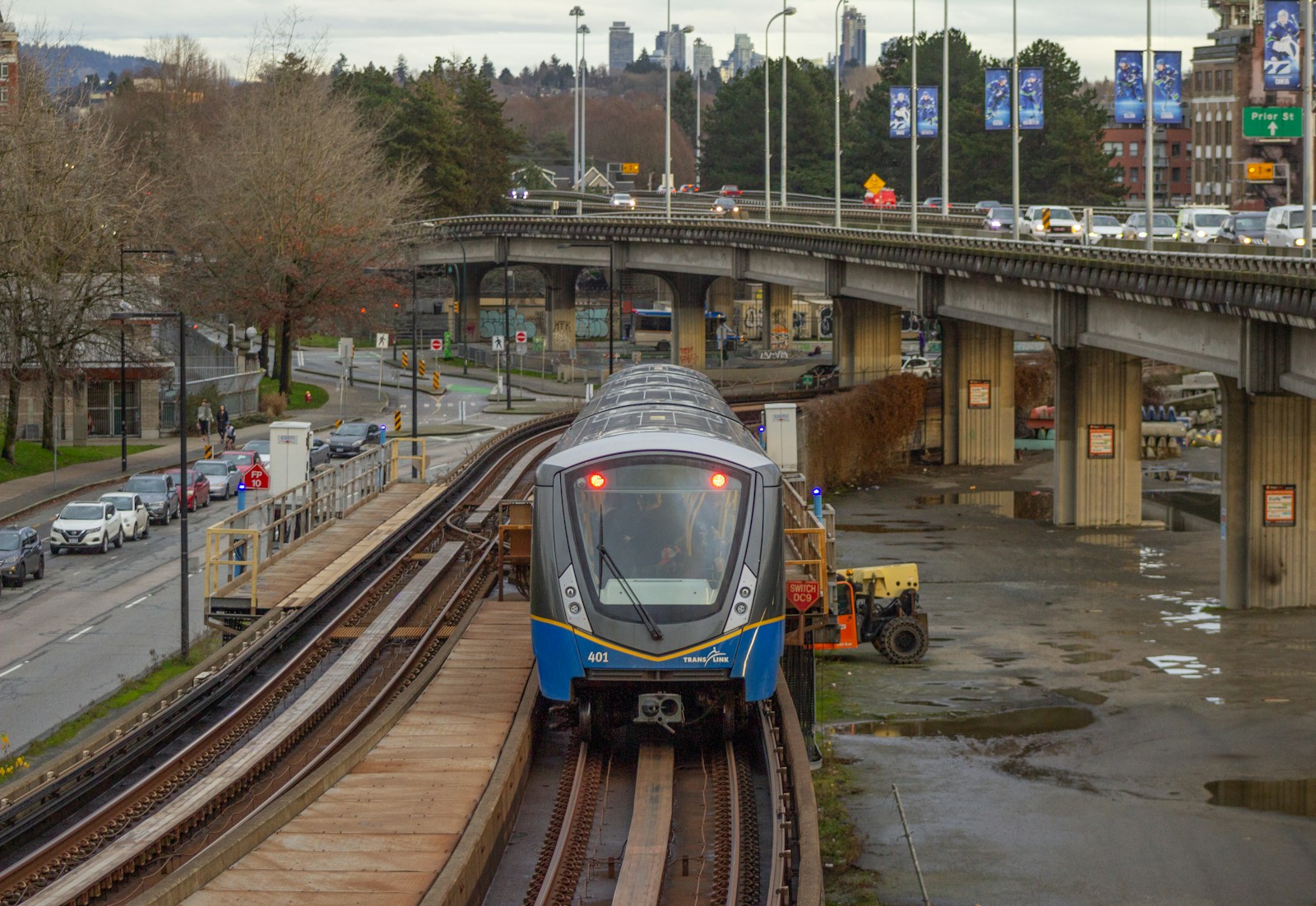
Metro Vancouver is in the middle of one of the biggest infrastructure shifts in its history. Billions of dollars are being invested into transit expansions that will fundamentally change how people move across this region. Most people see construction delays and traffic headaches. I see something else entirely — a long-term map of where opportunity is heading.
The truth is, transit doesn't just change how you commute. It changes where people choose to live. And if you're buying, selling, or investing right now, you need to understand that distinction.
The Broadway Subway Project: A Corridor Being Transformed
The Broadway Subway Project is extending the Millennium Line 5.7 kilometers west from VCC–Clark all the way to Arbutus, adding six new underground stations along one of the busiest transit corridors in North America. We're talking about a corridor that already handles over 100,000 transit trips per day — and that number is only going up.
What this means practically is faster commutes from East Vancouver into Kitsilano, meaningful congestion relief on Broadway, and significant densification around every new station. This corridor is evolving into a transit-oriented urban hub. Housing, retail, commercial development — it's all going to follow the infrastructure. It always does.
The Surrey–Langley Extension: South of the Fraser Is Opening Up
The Surrey–Langley SkyTrain extension is equally significant. It stretches the Expo Line 16 kilometers from King George Station to Langley City, adding eight new stations along the Fraser Highway corridor. This project has backing from all levels of government because the population growth south of the Fraser demands it.
Areas like Fleetwood, Clayton, and Langley City are going to look very different over the next decade. Reduced car dependency, improved regional access, and new urban centers built around station nodes — this is not speculation. This is the predictable, data-backed outcome of every major transit expansion this city has seen.
Where Transit Goes, Growth Follows — Full Stop
This is not a new phenomenon. It's a repeatable pattern. When rapid transit infrastructure arrives in a corridor, commute times shrink, accessibility improves, and demand around stations increases. That's what's called transit-oriented development, and it has a direct, measurable impact on long-term real estate value.
Renters are prioritizing transit access over square footage. Buyers are shifting toward location efficiency. And proximity to SkyTrain is increasingly being weighted just as heavily as school districts or square footage — sometimes even price. That's a meaningful behavioral shift, and smart investors are paying attention to it.
People Aren't Waiting for Completion — They're Positioning Early
One of the most important trends I'm watching right now is this: serious buyers and investors are not waiting for these lines to open. They are positioning themselves in advance — targeting future station locations, areas undergoing rezoning, and neighborhoods transitioning to higher density.
This is the discipline and long-term thinking that separates strategic investors from reactive ones. Historically, prices adjust as infrastructure completes and communities become more desirable once transit becomes operational. The window of opportunity tends to narrow the closer you get to a ribbon-cutting ceremony.
The Bigger Picture
Over the next five to ten years, these transit projects will connect more communities, reduce travel times across the region, and support continued population growth in one of Canada's most in-demand markets. At the end of the day, this is about the long game. It's not sexy to talk about infrastructure timelines and rezoning corridors, but this is exactly the kind of data-driven, strategic thinking that builds real wealth in real estate.
Whether you're thinking about your next move, evaluating an investment, or simply trying to understand where this city is heading — these expansions matter. Infrastructure doesn't just change how we travel. It changes where value is created.
If you want to get ahead of where Metro Vancouver is heading — not just react to it — let's talk strategy. Reach out and let's map out your next move.
Roland Kym brings nearly two decades of experience in the Vancouver real-estate market to his work at Move to Vancouver Canada. Having completed over 1,000 transactions, Roland has developed a streamlined system dedicated to helping professionals, families and international buyers relocate smoothly and confidently.
He knows the region inside and out—from neighbourhoods and school zones to market trends and cross-border considerations. His approach is not about selling dreams, but delivering results. On this blog he draws on his real-world relocation expertise to give you clear, actionable guidance so you can make Vancouver your next home without the guesswork.


 The data relating to real estate on this website comes in part from the MLS® Reciprocity program of either the Greater Vancouver REALTORS® (GVR), the Fraser Valley Real Estate Board (FVREB) or the Chilliwack and District Real Estate Board (CADREB). Real estate listings held by participating real estate firms are marked with the MLS® logo and detailed information about the listing includes the name of the listing agent. This representation is based in whole or part on data generated by either the GVR, the FVREB or the CADREB which assumes no responsibility for its accuracy. The materials contained on this page may not be reproduced without the express written consent of either the GVR, the FVREB or the CADREB.
Comments:
Post Your Comment: