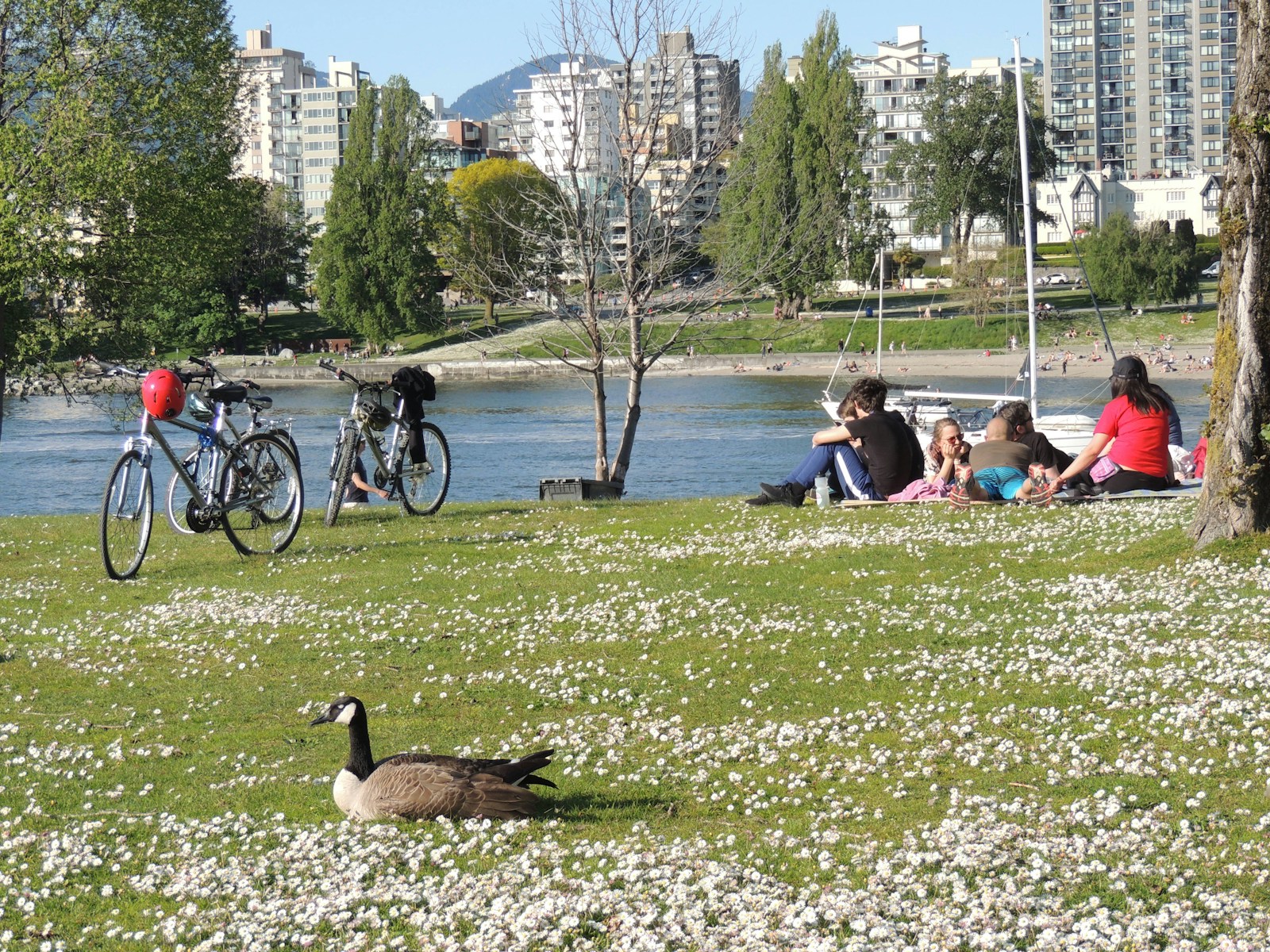
Spring Break in the Lower Mainland isn't just a school holiday. If you know what to look for, it's one of the most revealing market intelligence windows of the year.
The weather isn't perfect. It's not full summer energy yet. But something shifts. Parks fill up. The seawall gets busy. Coffee shops have a mid-morning crowd that didn't exist a few weeks ago. Families are outside — and when families are outside, you learn a lot about where people actually want to live.
I've been studying neighbourhoods across Metro Vancouver for over 15 years. And every spring, I'm reminded that the best market data doesn't come from a spreadsheet. It comes from paying attention to how communities actually function.
Parks are data points — start treating them that way
During Spring Break, neighborhood parks become quiet market indicators. Most buyers never think about this. They're too focused on interest rates, listing prices, or whether stainless appliances come with the unit.
The truth is, this week tells you things a listing photo never will. Watch for:
Which playgrounds are packed versus empty at 10am on a Tuesday
Which streets feel safe, connected, and walkable — versus isolated
Where parents linger and talk versus where people rush through
Which areas have genuine community rhythm and which ones are just houses next to other houses
That's not sentiment. That's signal. And in a long-term buy-and-hold strategy, signal matters more than noise.
Walkability gets stress-tested in real time
When school is out, daily routines shift. Instead of the morning grind, families explore. They walk to parks. They bike along trails. They discover exactly how close — or how far — groceries, coffee, and transit actually are.
Proximity suddenly matters. Not in theory. In reality.
"Choosing the right Lower Mainland neighborhood isn't about square footage. It's about how your week unfolds when you're not in a rush."
That's the framework I use with every buyer I work with. It's not sexy, but it's scalable and it holds up over time. A neighborhood that functions well for your lifestyle is one you'll stay in. One that doesn't — you'll sell in three years and wonder why you bought it in the first place. That's not a strategy. That's a mistake with a mortgage attached.
School catchments quietly shape the long game
Spring Break also surfaces how central schools are to family decision-making. Catchment areas, registration timing, after-school programs, community involvement — these conversations happen informally on park benches and at coffee shop lineups this week.
Even if a move isn't immediate, this is often when serious conversations start. Understanding how school catchments work in
is part of a disciplined five-year plan — not an afterthought you Google on moving day.
If you're a buyer with kids or planning a family, build this into your strategy early. It will affect your options, your price point, and your timeline more than most people anticipate.
Community energy becomes visible — and it's different everywhere
In winter, many Lower Mainland neighbourhoods feel similar. Grey skies flatten everything. In March, the differences get sharp.
Some areas feel vibrant and social. Others feel quiet and residential in a way that tips into isolation. Some neighbourhoods are genuinely walkable. Others require a car for nearly everything — and that reality tends to compound over time, not improve.
How busy a park actually gets mid-week
How traffic flows outside of rush hour
How families use and share common spaces
How close — physically and culturally — neighbourhoods feel to one another
You start to grasp how Metro Vancouver functions as a connected network, not a collection of isolated suburbs. That understanding is the foundation of smarter long-term decisions.
Spring Break doesn't create demand — it reveals it
This is the most important point. I'm not telling you to rush out and make an offer because parks are busy. This isn't about urgency. It's about observation.
Spring Break shows you which communities already have strong family presence. Which neighbourhoods activate when winter fades. Where outdoor space is genuinely integrated into daily life versus where it exists on a map but nobody actually uses it.
For long-term buyers planning a move later this year or next — this week is a preview. Use it like one.
At the end of the day, real estate strategy is about making decisions based on systems and data — not emotion and urgency. The buyers who win over a five-year horizon are the ones who did the work before everyone else started paying attention.
This week is your edge. Don't waste it.
Roland Kym brings nearly two decades of experience in the Vancouver real-estate market to his work at Move to Vancouver Canada. Having completed over 1,000 transactions, Roland has developed a streamlined system dedicated to helping professionals, families and international buyers relocate smoothly and confidently.
He knows the region inside and out—from neighbourhoods and school zones to market trends and cross-border considerations. His approach is not about selling dreams, but delivering results. On this blog he draws on his real-world relocation expertise to give you clear, actionable guidance so you can make Vancouver your next home without the guesswork.


 The data relating to real estate on this website comes in part from the MLS® Reciprocity program of either the Greater Vancouver REALTORS® (GVR), the Fraser Valley Real Estate Board (FVREB) or the Chilliwack and District Real Estate Board (CADREB). Real estate listings held by participating real estate firms are marked with the MLS® logo and detailed information about the listing includes the name of the listing agent. This representation is based in whole or part on data generated by either the GVR, the FVREB or the CADREB which assumes no responsibility for its accuracy. The materials contained on this page may not be reproduced without the express written consent of either the GVR, the FVREB or the CADREB.
Comments:
Post Your Comment: