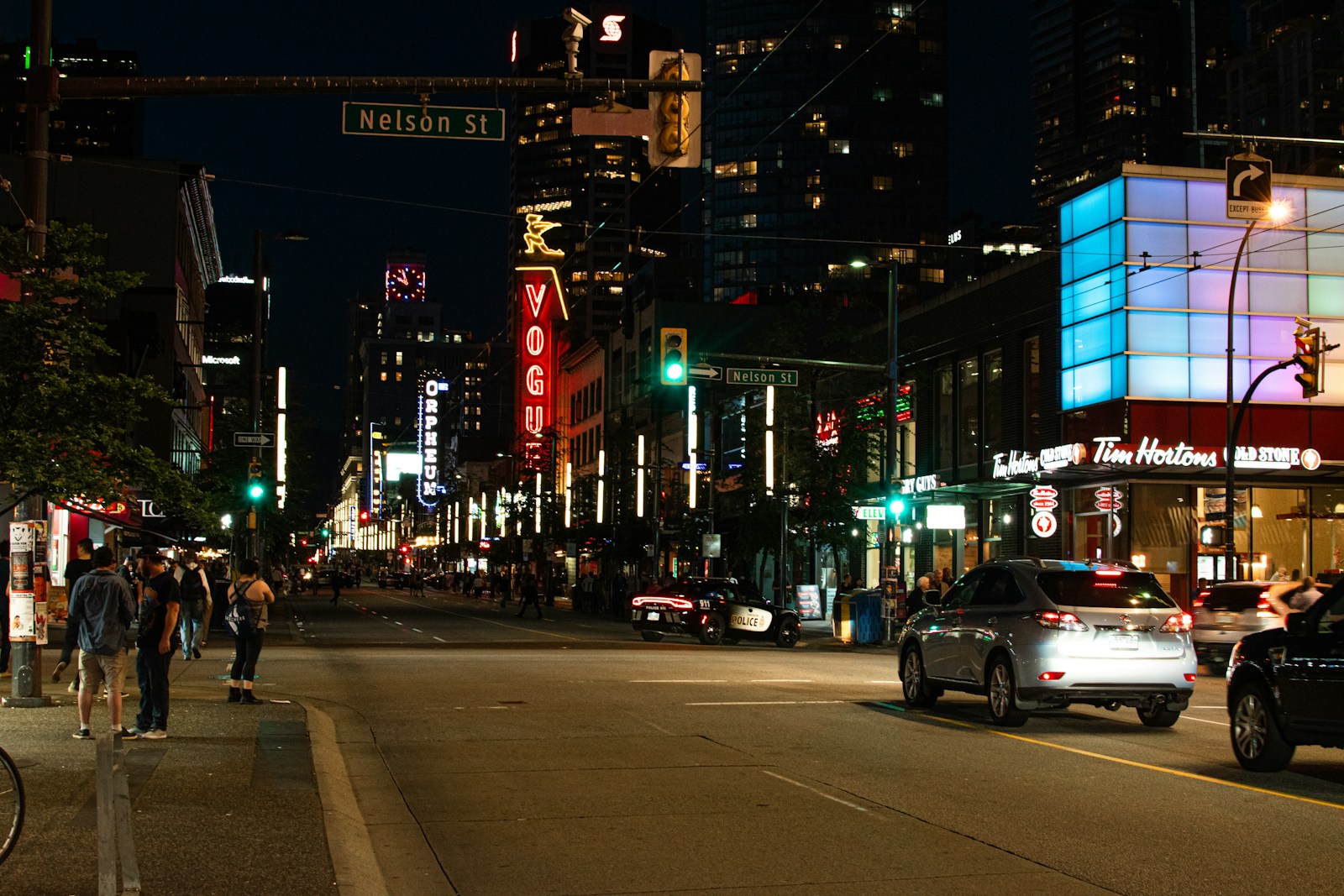
The city looks busier. The question isn't whether it's growing — it's whether you understand what that growth actually means for your long-term strategy.
If you've been in Vancouver lately — driving through the Lower Mainland, riding the SkyTrain, trying to grab a table at a neighborhood spot — you've probably felt it:
This city is getting packed.
And you're not wrong. It is busier. More active. More vertical. But here's where most people stop thinking, and where I want you to start: feeling busy and being overcrowded are two very different things. One is a sensation. The other is a structural problem.
Vancouver doesn't have a structural problem. It has a growth strategy — and if you understand it, the story stops being a warning and starts being an opportunity.
Geography Forced Vancouver to Think Differently
Most North American cities have room to sprawl. Vancouver doesn't. Mountains to the north, ocean to the west, farmland protections to the south and east. This city was never going to expand endlessly outward.
That constraint isn't a flaw — it's one of the most important value drivers in the market. Limited land supply plus sustained demand equals long-term price support. That's not opinion; that's data.
And because of that geographic reality, Metro Vancouver made a deliberate choice decades ago: grow up, not out. Invest in transit corridors. Build density around hubs. Create walkable, livable communities that don't rely on car ownership as their foundation.
That's not overcrowding. That's adaptation. And smart investors know the difference.
Density Isn't the Problem — Poorly Executed Density Is
I hear people conflate density with decline. That's a mistake. When density is done right, it doesn't reduce quality of life — it enhances it. It means:
More walkable communities with services close to home
Better transit access reducing commute times and car dependence
Parks and green space integrated into residential planning
Stronger neighborhood economies and local business viability
Look at the neighbourhoo’s commanding the highest demand in this city. They're not sprawling. They're connected, walkable, and dense. That's not a coincidence — that's the market telling you what it values.
Transit Investment Is the Tell
You want to know if a city is growing smart or just growing fast? Look at transit infrastructure spend.
Vancouver's SkyTrain expansions, bus corridor upgrades, and transit-oriented development aren't reactive moves. They are long-term planning tools — and they signal confidence. Confidence in population growth. Confidence in economic stability. Confidence in long-term desirability.
When government and capital are placing long bets on infrastructure, you should be paying attention. That's the signal, not the noise.
Spring Energy Isn't the Same as Structural Strain
Part of what you're feeling right now is seasonal. Spring activates Vancouver in a way that winter doesn't — patios fill up, tourism picks up, families are out exploring. The city feels alive, and alive can feel like too much if you're not used to it.
Don't confuse that energy with a problem. Vancouver consistently ranks as one of the most livable cities in the world precisely because it has invested in managing growth rather than avoiding it.
The truth is: livability and density can coexist. Vancouver is proof of that when the planning is done right.
What This Means for Your Long-Term Strategy
I've been in this market for over 15 years. The consistent theme I've seen among investors who build real wealth here versus those who spin their wheels is simple: they buy and hold in markets where the fundamentals support long-term appreciation.
Vancouver's fundamentals are:
Constrained land supply with no realistic solution on the horizon
Continued population growth driven by immigration and interprovincial migration
Sustained infrastructure investment increasing connectivity and desirability
A global reputation for livability that keeps international interest elevated
It's not sexy. It's not a flip. It's a five-year, ten-year, twenty-year play. But that's where the wealth is built — in disciplined, strategic positioning in markets where the data supports patient capital.
Stop Asking If It's Too Crowded. Start Asking If You're Positioned.
Cities either resist growth or manage it. Vancouver has made a deliberate choice to manage it — with intention, with infrastructure, and with a long-term vision that most markets don't have the constraints or the discipline to execute.
The question isn't whether Vancouver is getting crowded. The question is whether you're positioned to benefit from where it's going.
At the end of the day, the investors who understand this market aren't the loudest voices in the room. They're the ones quietly building a portfolio in a city that keeps proving the skeptics wrong.
Roland Kym brings nearly two decades of experience in the Vancouver real-estate market to his work at Move to Vancouver Canada. Having completed over 1,000 transactions, Roland has developed a streamlined system dedicated to helping professionals, families and international buyers relocate smoothly and confidently.
He knows the region inside and out—from neighbourhoods and school zones to market trends and cross-border considerations. His approach is not about selling dreams, but delivering results. On this blog he draws on his real-world relocation expertise to give you clear, actionable guidance so you can make Vancouver your next home without the guesswork.


 The data relating to real estate on this website comes in part from the MLS® Reciprocity program of either the Greater Vancouver REALTORS® (GVR), the Fraser Valley Real Estate Board (FVREB) or the Chilliwack and District Real Estate Board (CADREB). Real estate listings held by participating real estate firms are marked with the MLS® logo and detailed information about the listing includes the name of the listing agent. This representation is based in whole or part on data generated by either the GVR, the FVREB or the CADREB which assumes no responsibility for its accuracy. The materials contained on this page may not be reproduced without the express written consent of either the GVR, the FVREB or the CADREB.
Comments:
Post Your Comment: